
Commercial construction and building maintenance frequently involve work that takes place well above floor level. From installing ceiling panels and lighting fixtures to completing painting and mechanical work, contractors need suitable equipment that allows trained workers to access elevated areas.
A construction scissor lift rental can provide a practical solution for many vertically accessed work areas. Instead of relying on repeated ladder repositioning, crews may be able to work from an elevated platform designed for the task. At Reliable Scissorlift Rental, customers can explore rental options for projects that require dependable access equipment.
Why Overhead Construction Requires Careful Planning
Overhead installation work often involves multiple trades operating within the same building. Electricians, ceiling installers, painters, and mechanical contractors may all need access to elevated surfaces during different phases of construction.
Without a coordinated plan, equipment movement and scheduling conflicts can interrupt progress. Contractors should identify which areas require elevated access, when the work will occur, and whether other crews will be operating nearby. This preparation helps determine how scissor lifts can fit into the overall construction schedule.
How Scissor Lifts Support Ceiling Installation
Suspended ceilings and other overhead finishes require workers to reach installation points while handling tools and approved materials. A scissor lift raises its platform vertically, providing access to areas directly above or near the machine.
The platform can be useful for tasks requiring repeated work along a ceiling, provided the machine is operated within its limits. Contractors should consider ceiling height, platform dimensions, allowable loads, and access restrictions before choosing equipment.
For projects involving extensive overhead work, visit Reliable Scissorlift Rental to explore available equipment and discuss the requirements of your installation schedule.
Why Electric Scissor Lifts Are Used Indoors
An electric scissor lift rental may be appropriate for certain indoor projects because electric-powered models do not produce engine exhaust at the point of use. Many are designed for suitable finished or prepared surfaces, although individual machine specifications vary.
Electric equipment can be useful in warehouses, commercial buildings, and interior renovation environments. Contractors must still evaluate floor capacity, operating clearances, battery charging arrangements, and other worksite requirements. Not every electric model is suitable for every indoor application.
How Lighting Installation Benefits From Elevated Access
Lighting upgrades often require workers to access ceiling-mounted fixtures, wiring locations, and installation hardware. Depending on the layout, a scissor lift may provide an appropriate work platform for these activities.
Electrical work introduces hazards that must be evaluated separately from equipment access. Qualified workers should follow applicable electrical safety procedures, including appropriate isolation and verification practices. The lift itself must also remain clear of electrical hazards according to the manufacturer’s instructions and applicable requirements.
Contractors planning lighting upgrades can explore the rental information available on our equipment rental website before arranging access equipment.
Why Platform Size Matters for Installation Crews
Scissor lift platforms differ in length, width, and available extensions. A suitable platform must accommodate the intended number of workers, necessary tools, and permitted materials without exceeding rated capacity.
Platform dimensions also influence maneuverability. Narrow work areas may require compact equipment, while larger spaces may allow different configurations. Selecting the appropriate dimensions can help contractors avoid bringing equipment that cannot pass through doors or reach the intended work area.
How HVAC and Mechanical Contractors Use Scissor Lifts
Commercial HVAC projects may involve overhead ductwork, ventilation components, and mechanical installations. These tasks can require repeated access to ceiling areas, particularly in warehouses or buildings with exposed mechanical systems.
Scissor lifts may provide access for certain installation and inspection activities. However, they should not be used as substitutes for cranes, material hoists, or other lifting equipment when a task exceeds their intended purpose. Workers must follow approved procedures for handling tools and materials. Visit our Services page for more information.
What Contractors Should Know About Load Capacity
Every scissor lift has a maximum rated platform capacity. That rating applies to the combined weight of workers, tools, and permitted materials, subject to the manufacturer’s specifications.
Overloading can affect stability and create serious hazards. Contractors should calculate anticipated loads before selecting equipment and ensure workers understand the limits. If the installation involves large or unusually heavy materials, another method of material handling may be necessary.
Why Floor Conditions Must Be Evaluated
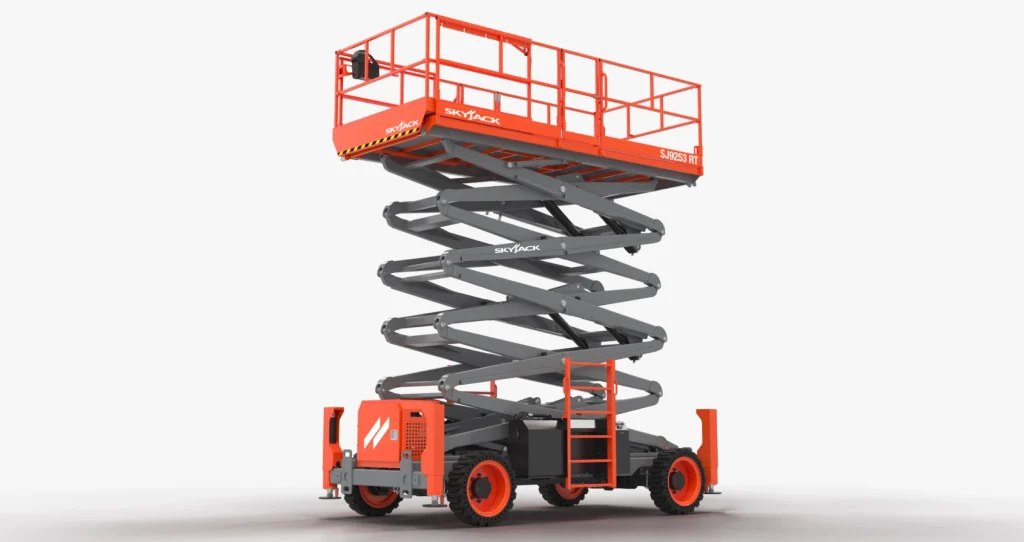
Even an indoor construction scissor lift rental requires a suitable operating surface. Contractors should inspect the work area for slopes, openings, debris, floor transitions, and other hazards that could affect machine stability.
The building’s floor must also be capable of supporting the equipment and its loads. This is particularly important when operating on suspended floors or surfaces with uncertain capacity. A qualified assessment may be needed before equipment is positioned.
What OSHA Says About Scissor Lift Safety
The Occupational Safety and Health Administration’s scissor lift guidance explains the importance of trained operators, maintained guardrails, stable operating surfaces, and following manufacturer instructions.
OSHA also highlights risks involving overhead obstructions, electrical sources, and equipment movement. These considerations are especially relevant during ceiling installation, when workers operate near beams, lighting, ductwork, and other elevated building components.
How Scissor Lifts Can Support Painting Projects
Commercial painting frequently involves large wall surfaces, ceilings, and structural elements. Suitable elevated platforms can help trained workers access areas that would otherwise require repeated repositioning of smaller access equipment.
Before renting, painting contractors should evaluate the work height, surface conditions, ventilation, and materials involved. Paint containers and equipment must remain within platform load limits, and any chemical or ventilation hazards require appropriate controls.
Explore Reliable Scissorlift Rental’s website to learn more about rental options for commercial painting and finishing projects.
Why Equipment Access Should Be Checked Before Delivery
An appropriately sized lift is useful only if it can reach the work area. Contractors should measure doorways, corridors, loading entrances, and other restrictions before scheduling delivery.
Overhead clearance matters as well. Pipes, beams, sprinkler systems, and existing fixtures can limit movement within a building. Reviewing these conditions beforehand helps identify whether a particular model is compatible with the jobsite.
How Rental Scheduling Affects Project Efficiency
Overhead projects may involve multiple stages of work. A scissor lift needed for lighting installation might also be required later for ceiling finishing or inspection.
Coordinating rental dates with the construction schedule can help reduce unnecessary downtime. Contractors should identify when equipment is needed, how long each activity may take, and whether access areas must remain clear for other trades.
For scheduling and equipment inquiries, contact Reliable Scissorlift Rental to discuss the intended project duration and operating requirements.
Why Operator Training Is Essential
Scissor lifts must be operated by properly trained personnel who understand the specific equipment and worksite hazards. Training should address controls, inspection procedures, stability, load limits, and safe operating practices.
Workers should also understand that standing on guardrails, using unauthorized extensions, or bypassing safety devices is unsafe. Equipment selection and training should be coordinated before work begins, not after the lift arrives.
How to Prepare for an Electric Scissor Lift Rental
Electric scissor lift rental planning should include charging arrangements, expected daily operating time, floor conditions, and equipment access. Contractors should confirm the model’s specifications and determine whether it suits the intended working environment.
The appropriate choice depends on the task rather than the power source alone. A compact electric machine may be useful for one interior project, while another job requires different platform dimensions or working heights.
Plan Your Next Overhead Project With Reliable Scissorlift Rental
Ceiling installations, lighting upgrades, painting, and mechanical work all benefit from careful access planning. The right equipment can help crews organize their work while maintaining attention to operating limits and jobsite safety.
Contact Reliable Scissorlift Rental today to discuss construction scissor lift rental and electric scissor lift rental options for your upcoming project. Share your working height, jobsite conditions, access dimensions, and expected rental dates so suitable equipment options can be reviewed. Visit our website to request a rental quote today and take the next step toward a well-planned overhead installation project!