
You reserved the scissor lift.
Delivery is scheduled.
Your crew is ready.
Then the equipment arrives and discovers a problem.
The lift doesn’t fit through the access point.
Materials are blocking the work area.
The ground is unsuitable.
Nobody checked the overhead clearance.
Or the employee expected to operate the lift isn’t properly trained.
Suddenly, rental time is being used to solve problems that could have been addressed beforehand.
When arranging a scissor lift rental Florida contractors and businesses depend on, preparing the job site before delivery can make the entire rental process more efficient.
Here’s what to evaluate.
Start With the Work You’re Actually Performing
Before thinking about delivery, define the task.
What exactly will workers be doing from the platform?
Possible applications include:
- Electrical installation
- Lighting maintenance
- HVAC work
- Warehouse maintenance
- Painting
- Sign installation
- Construction
- Facility repairs
- Ceiling work
- Inventory management
Knowing the task helps determine where the lift needs to operate and what conditions it will encounter.
It also helps identify platform requirements, working height, access restrictions, and other equipment considerations.
If you’re still evaluating equipment for an upcoming project, visit our Services page to learn more about available scissor lift rental options and equipment for different indoor and outdoor applications.
Measure the Required Working Height
Don’t estimate height from the ground.
Determine where the worker actually needs to reach.
Remember that platform height and working height aren’t necessarily the same measurement.
Provide accurate information when arranging the rental so the provider can help identify appropriate equipment.
Choosing insufficient height can leave workers unable to safely reach the work area.
At the same time, selecting substantially more equipment than the job requires may create unnecessary size and access challenges.
Measure Every Access Point
A scissor lift doesn’t teleport into position.
It needs a physical route from the delivery area to the work zone.
Walk that route.
Measure:
- Doorways
- Gates
- Hallways
- Aisles
- Loading areas
- Turning points
- Ceiling clearance
- Other restricted areas
Don’t check only width.
Height matters too.
If the equipment needs to travel through a building, make sure the complete route can accommodate it.
Inspect the Ground or Floor
The operating surface matters.
Indoor projects may take place on smooth concrete.
Outdoor projects could involve pavement, compacted surfaces, gravel, or uneven terrain.
Different equipment is designed for different conditions.
OSHA warns that scissor lifts can become unstable when used on uneven or unstable ground and recommends employers assess the work area before operation.
Tell the rental provider where the lift will operate rather than simply requesting “a scissor lift.”
For a scissor lift rental Lakeland Florida construction project, outdoor surface conditions may be just as important as required working height.
Look Up Before the Lift Goes Up
Overhead hazards deserve careful attention.
Before equipment arrives, inspect the work zone for:
- Power lines
- Electrical conductors
- Beams
- Pipes
- Sprinkler systems
- Lighting
- Ceiling structures
- Other overhead obstructions
The Occupational Safety and Health Administration identifies electrocution and contact with overhead objects as significant scissor-lift hazards.
According to OSHA’s Scissor Lift Safety guidance, employers should evaluate work areas for hazards and ensure equipment is operated according to manufacturer instructions.
That makes it an excellent external safety resource to include when planning elevated work.
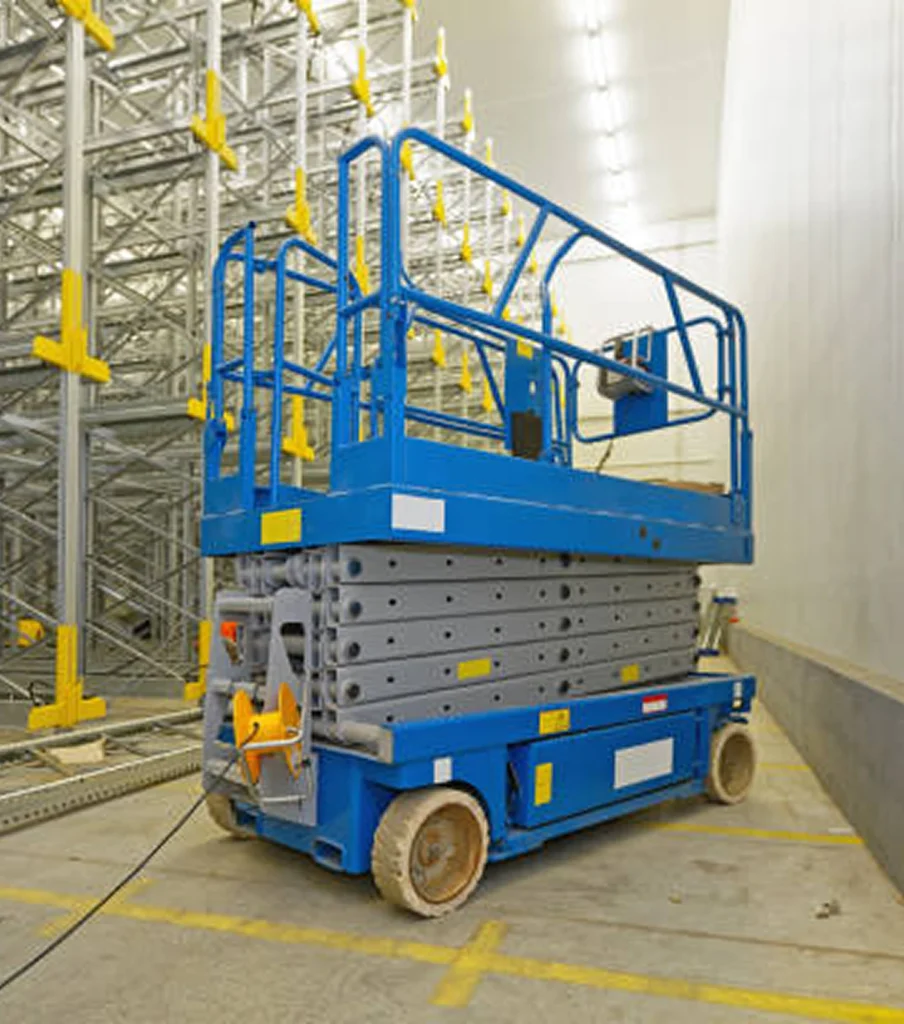
Clear the Work Zone Before Delivery
Don’t wait until the rental clock is running to start moving materials.
Clear unnecessary:
- Pallets
- Boxes
- Construction debris
- Tools
- Vehicles
- Stored materials
Give operators enough room to maneuver appropriately.
A clean work zone can also make it easier for crews to identify floor conditions and other hazards that might otherwise remain hidden.
Consider Indoor Versus Outdoor Conditions
Indoor and outdoor applications present different challenges.
Indoor projects may prioritize:
- Compact dimensions
- Maneuverability
- Floor protection
- Tight turning
- Low emissions
Outdoor projects may require consideration of:
- Terrain
- Wind
- Weather
- Slopes
- Surface stability
Don’t assume the equipment that works perfectly inside a warehouse will be equally appropriate for an outdoor construction site.
Discuss operating conditions before reserving equipment.
Florida Weather Needs to Be Part of the Plan
Florida weather can change quickly.
A sunny morning can become a stormy afternoon.
Wind and severe weather can create dangerous conditions for elevated work.
OSHA recommends employers consider weather conditions and follow manufacturer recommendations regarding operation in adverse conditions.
For outdoor projects, check weather conditions and build reasonable flexibility into the schedule.
Never pressure workers to continue operating elevated equipment simply because rental time is running.
Confirm Operator Training Before Delivery
Having equipment available doesn’t mean every employee is qualified to operate it.
OSHA states that employers must train workers who operate scissor lifts, including training related to hazards, manufacturer instructions, emergency procedures, and equipment operation.
Make sure training requirements have been addressed before the equipment arrives.
Rental day isn’t the ideal time to discover that nobody assigned to the project is prepared to operate the lift.
Understand the Manufacturer’s Instructions
Scissor lifts differ.
Operators should understand the specific equipment they’re using.
That includes:
- Controls
- Capacity
- Safety systems
- Emergency procedures
- Operating limitations
- Manufacturer instructions
Never assume experience with one machine automatically means someone understands every other model.
The equipment’s operating manual and required labels should remain available and legible.
Don’t Exceed Platform Capacity
Workers aren’t the only weight on the platform.
Tools and materials count too.
Before beginning work, think about what needs to go up with the operator.
OSHA recommends employers never exceed the manufacturer’s load rating and warns against using the lift to move equipment unless the lift is designed for that purpose.
Know the equipment limitations before loading the platform.
Coordinate Delivery Details
Delivery deserves planning too.
Determine:
- Exact delivery location
- Site contact
- Gate or access instructions
- Delivery hours
- Unloading area
- Job-site restrictions
- Pickup expectations
If the driver can’t access the property, the entire schedule can be affected.
Provide accurate contact information and make sure someone knowledgeable about the project is available when necessary.
Schedule the Rental Around the Actual Work
A lift sitting unused isn’t helping the project.
Coordinate the rental with the phase that actually requires elevated access.
Make sure:
Materials have arrived.
The work area is ready.
Required trades are scheduled.
Operators are available.
Preceding work has been completed.
Reliable scheduling can help businesses use rental time more efficiently without unnecessarily rushing the work itself.
Local Availability Can Simplify Equipment Logistics
Equipment location matters when coordinating active job sites.
Businesses searching for scissor lift rental Lakeland Florida options may benefit from working with a rental provider that understands the regional market and can help coordinate equipment around project requirements.
Likewise, companies needing scissor lift rental Florida service across multiple locations may value access to equipment without transporting owned machinery between every project.
To find rental options in your area, visit our Service Areas page and explore the locations served by Reliable Scissorlift Rental.
Choose a Rental Company That Helps You Prepare
Equipment rental should involve more than simply requesting a machine.
A knowledgeable rental provider can ask questions about:
- Working height
- Environment
- Surface conditions
- Access
- Rental duration
- Delivery
- Application
Those questions help match the rental to the actual project.
To learn more about Reliable Scissorlift Rental and its approach to equipment rentals, visit our About Us page before planning your next elevated-access project.
Prepare First and Make Better Use of Your Rental
A successful scissor lift rental begins before the equipment arrives.
Measure access points.
Evaluate surfaces.
Check overhead hazards.
Clear the work zone.
Coordinate other trades.
Confirm operator training.
Review weather conditions.
Plan delivery.
Schedule equipment around the actual work.
These steps can help reduce preventable delays and make the rental period more productive.
Whether you’re searching for scissor lift rental Florida options for construction, maintenance, electrical work, warehouse operations, or another project, or specifically need scissor lift rental Lakeland Florida service, good preparation makes a difference.
Contact Reliable Scissorlift Rental today to discuss your working height, job-site conditions, access requirements, project schedule, and delivery needs. Reserve the appropriate scissor lift for your next project and arrive at workday prepared to put it to use.