
You found the right scissor lift, confirmed the working height, and scheduled your project. Everything seems ready.
Then the equipment arrives and there’s a problem.
The entrance is too narrow. The surface isn’t appropriate. There isn’t enough space to unload safely. Or the crew needs to move the lift to another location halfway through the project but hasn’t planned transportation.
These situations can create delays that could have been avoided with a little preparation.
When searching for a scissor lift for rental near me, contractors should think beyond working height and rental price. Delivery, transportation, site access, operating conditions, and scheduling are all important parts of a successful rental.
For projects that require additional transportation flexibility, a scissor lift on trailer rental may also be worth considering.
Start With the Work You Need to Complete
Before choosing equipment or planning delivery, clearly identify the work the lift will perform.
Scissor lifts are commonly used for projects such as:
- Electrical installations
- Lighting maintenance
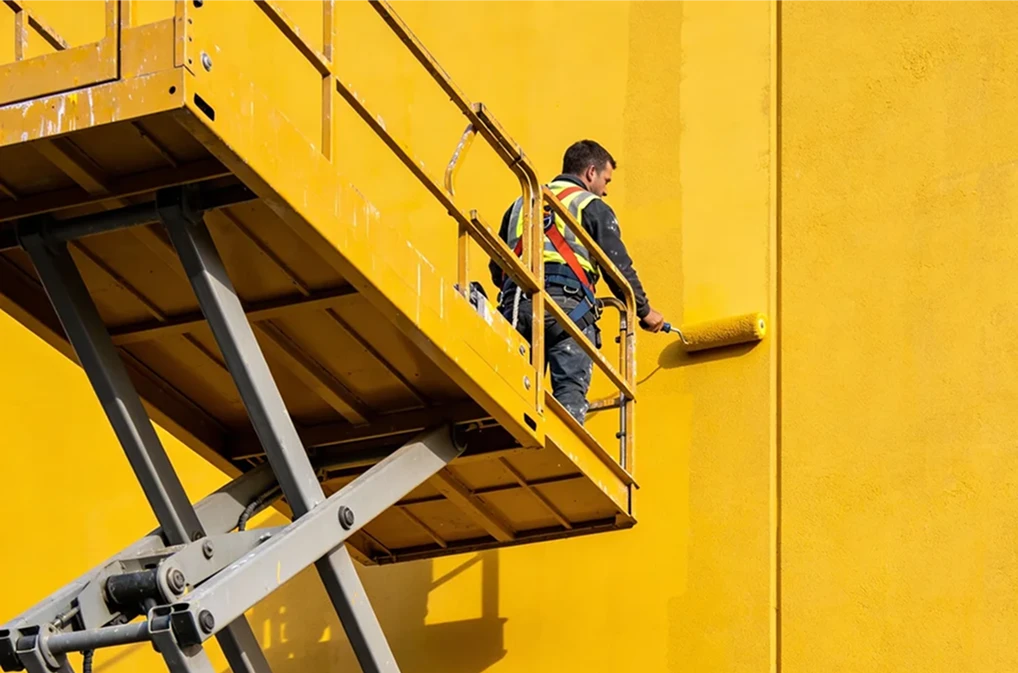
- Painting
- HVAC work
- Warehouse maintenance
- Sign installation
- Commercial renovations
- Construction
- Facility repairs
Different tasks may require different working heights, platform capacities, and equipment configurations.
Knowing exactly what the crew needs to accomplish helps prevent renting a machine that is unnecessarily large or incapable of reaching the required work area.
Measure the Job Site Before Reserving Equipment
One of the simplest ways to prevent delivery problems is to measure the property beforehand.
Important measurements may include:
- Doorway width
- Doorway height
- Hallway width
- Gate clearance
- Ceiling height
- Loading dock access
- Turning areas
Don’t estimate these dimensions based on appearance.
A difference of only a few inches may determine whether a particular machine can enter the building.
Providing accurate measurements to your rental company can make it easier to select equipment suited to the work environment.
If you’re comparing equipment for an upcoming project, visit our Services page to learn more about Reliable Scissorlift Rental’s available scissor lift solutions and find equipment suited to indoor, outdoor, commercial, construction, and maintenance applications.
Consider the Surface Where the Lift Will Operate
Scissor lifts need appropriate operating surfaces.
Indoor equipment may be designed primarily for smooth, level flooring, while outdoor models may be built for different job-site conditions.
Before delivery, evaluate whether the lift will operate on:
- Finished concrete
- Warehouse flooring
- Asphalt
- Compacted surfaces
- Outdoor construction areas
Uneven terrain, slopes, holes, debris, and drop-offs can create serious hazards.
According to the Occupational Safety and Health Administration (OSHA), employers should assess the worksite for hazards before selecting and using scissor lifts. OSHA specifically recommends choosing work locations with firm, level surfaces away from hazards such as holes, slopes, bumps, drop-offs, and ground obstructions.
Make Sure There’s Room for Delivery
The equipment doesn’t simply need enough space to operate—it also needs a practical route from the delivery vehicle to the work area.
Before your rental arrives, consider:
- Where the delivery vehicle will park
- Where the lift will be unloaded
- Whether traffic needs to be temporarily redirected
- Whether gates need to be opened
- Whether parked vehicles could obstruct access
- Whether construction materials block the unloading area
Preparing this space before the scheduled delivery can help reduce unnecessary downtime.
When Does a Trailer Rental Make Sense?
Sometimes contractors need more control over equipment transportation.
A scissor lift on trailer rental may provide additional flexibility when a project involves multiple locations or when the renter needs an appropriate transportation solution alongside the equipment.
For example, a trailer option may be useful when crews need to coordinate equipment movement according to their own project schedule.
However, transportation requirements should always be discussed with the rental provider. Equipment weight, trailer specifications, towing capacity, loading procedures, and applicable transportation requirements all need to be considered.
Never assume a vehicle is appropriate for towing equipment based only on appearance.
Think About Your Entire Project Schedule
When searching for a scissor lift for rental near me, determine exactly when you’ll need the machine.
Consider:
- Project start date
- Expected duration
- Equipment delivery
- Setup time
- Potential weather delays
- Pickup or return date
Renting too early may mean paying for equipment that isn’t being used.
Scheduling too late could leave workers waiting for the lift before they can begin elevated tasks.
Coordinating equipment availability with your overall project schedule helps improve efficiency.
Prepare the Work Area Before the Lift Arrives
If possible, complete basic site preparation before delivery.
Remove:
- Loose debris
- Unnecessary materials
- Temporary obstructions
- Equipment blocking access
- Other items interfering with movement
Inside buildings, make sure the intended travel route remains clear.
This doesn’t only save time. It also creates a more organized work environment for equipment operators and surrounding workers.
Check for Overhead Hazards
Job-site planning also means looking upward.
Potential overhead hazards can include:
- Power lines
- Structural beams
- Pipes
- Lighting fixtures
- Door frames
- Tree branches
- Building overhangs
OSHA warns that scissor lifts should be positioned to avoid crushing and electrical hazards. Its guidance also notes that employers should select locations that maintain appropriate clearance from electrical power sources and other overhead hazards.
These conditions should be identified before the equipment is elevated.
Choose Equipment Based on Indoor or Outdoor Use
Not every scissor lift is designed for the same environment.
Indoor projects may prioritize:
- Compact dimensions
- Tight turning capability
- Appropriate tires
- Lower noise
- Electric power
Outdoor projects may require equipment suited to different surfaces and conditions.
Weather also becomes an important consideration outdoors. OSHA specifically advises using scissor lifts outside only when weather conditions are appropriate and following manufacturer requirements regarding wind and safe operation.
If you’re unsure which equipment matches your environment, professional rental guidance can help.
To learn more about our approach to equipment rental and customer support, visit our About Us page and discover how Reliable Scissorlift Rental helps customers select practical equipment based on their project requirements.
Don’t Forget Platform Capacity
Working height often receives the most attention, but platform capacity matters too.
Think about everything that may be on the platform, including:
- Workers
- Tools
- Materials
- Equipment
The manufacturer’s rated load capacity should never be exceeded.
OSHA also emphasizes that employers should ensure platform weight does not exceed the manufacturer’s load rating.
Discuss your expected platform requirements with the rental provider before choosing a model.
Make Sure Operators Are Properly Trained
Having the right equipment doesn’t eliminate the need for qualified operation.
OSHA states that only trained workers should use scissor lifts and that employers must ensure workers can properly operate the equipment. Training should address correct operating procedures, material handling and weight limits, and relevant workplace hazards.
Operators should also follow manufacturer instructions and complete required pre-use inspections.
Proper training benefits both worker safety and project efficiency.
Consider Whether the Lift Will Move Between Sites
Some projects take place at one property. Others involve crews working at several locations.
If equipment will need to move during the rental period, discuss transportation requirements before finalizing the reservation.
A scissor lift on trailer rental may offer a useful solution for certain projects, but equipment transportation should always be planned around the specific machine, trailer, tow vehicle, and applicable requirements.
Planning this before the project begins prevents transportation from becoming an unexpected obstacle halfway through the job.
Reserve Equipment Before the Last Minute
Waiting until the morning you need equipment isn’t always the best strategy.
Popular lift sizes and configurations may have limited availability during busy periods.
Early planning gives you more time to:
- Select appropriate equipment
- Verify site measurements
- Arrange delivery
- Coordinate project schedules
- Prepare the operating area
- Plan transportation
When you already know your project dates, reserving equipment in advance can reduce last-minute uncertainty.
If you’re working outside your normal area, visit our Service Areas page to see where Reliable Scissorlift Rental provides dependable equipment rental solutions for construction, maintenance, warehouse, commercial, and industrial projects.
A Little Preparation Can Prevent Major Delays
Finding the right equipment is important, but preparing for that equipment is equally valuable.
Before your rental arrives, confirm the working height, platform capacity, operating surface, doorway clearance, delivery route, overhead hazards, project schedule, and transportation requirements.
These details can make the difference between equipment arriving ready to work and a project losing valuable time to preventable complications.
Whether you’re searching for a scissor lift for rental near me or need a scissor lift on trailer rental for additional transportation flexibility, planning ahead helps you get more value from the equipment and keeps your project moving efficiently.
Reserve Your Scissor Lift and Keep Your Project Moving
Don’t wait until delivery day to discover that your project needs different equipment or additional transportation planning.
At Reliable Scissorlift Rental, we help contractors, facility managers, maintenance teams, and businesses find dependable scissor lift solutions suited to their projects. From choosing an appropriate lift to coordinating rental timing and transportation needs, our goal is to make equipment rental straightforward and convenient.
Whether you’re looking for a scissor lift for rental near me for an upcoming construction or maintenance project or need a scissor lift on trailer rental to simplify equipment transportation, we’re ready to help you plan ahead.
Contact Reliable Scissorlift Rental today to discuss your project, reserve the right equipment, and keep your crew productive from delivery through project completion.