
A contractor needs to install lighting 25 feet above the floor. A maintenance crew needs access to a warehouse ceiling. A painter needs to reach the upper exterior of a commercial building. Each project clearly requires elevated access, but how tall should the scissor lift actually be?
The answer isn’t always as obvious as looking at the height of the work area.
Scissor lift specifications commonly include platform height and working height, and understanding the difference can help you compare equipment more accurately. At the same time, height is only one consideration. Machine dimensions, platform capacity, surface conditions, access points, power type, and the work environment all influence which lift is appropriate.
Reliable Scissorlift Rental provides indoor, electric, outdoor, and construction equipment for different applications. Visit our Services page to explore available options before arranging your next rental.
Understand Platform Height First
Platform height refers to how high the platform itself can rise.
If the platform reaches 20 feet, that doesn’t necessarily mean the worker can only perform tasks at exactly 20 feet. The person standing on the platform naturally has additional vertical reach.
This is where working height becomes useful.
Manufacturers and rental providers may use working-height figures to help describe the approximate height a worker can reach while standing on the elevated platform. However, users should always review the specifications for the particular machine rather than relying on assumptions.
Understanding which measurement you’re looking at can prevent confusion when comparing scissor lift rentals for a project.
Working Height Isn’t the Same as Platform Height
Working height generally accounts for the worker’s reach above the platform.
For example, equipment with a particular platform height may be described with a greater working height based on an assumed worker reach. The exact figures depend on the machine and manufacturer’s specifications.
This distinction matters when requesting equipment.
If you tell a rental company only that your ceiling is 30 feet high, that information is useful but incomplete. Explain what workers need to reach and what type of task they’ll perform at that height.
Installing something directly overhead may create different positioning requirements from working on the side of a structure.
Think About What the Worker Will Be Doing
Height requirements should be considered alongside the actual task.
Will workers install lighting?
Repair HVAC components?
Paint walls?
Perform ceiling maintenance?
Install signage?
Complete electrical work?
Inspect equipment?
The worker needs to reach the task comfortably while remaining within the platform and following applicable safety procedures. OSHA specifically warns workers not to stand on guardrails or use ladders or other devices on the platform to gain additional height.
If the equipment doesn’t provide sufficient reach, improvising a way to become taller isn’t the solution.
Never Use a Ladder on the Platform to Gain Height
This deserves special attention because choosing a lift that’s slightly too short can create temptation to improvise.
OSHA states that workers should not stand on guardrails or use ladders or other devices on a scissor-lift platform to increase working height.
The safer approach is to select equipment that provides appropriate access to the work area from the beginning.
When comparing scissor lift rentals, don’t choose a shorter machine simply because it’s available and assume workers can compensate after it arrives.
Equipment should fit the job rather than forcing the job to fit unsuitable equipment.
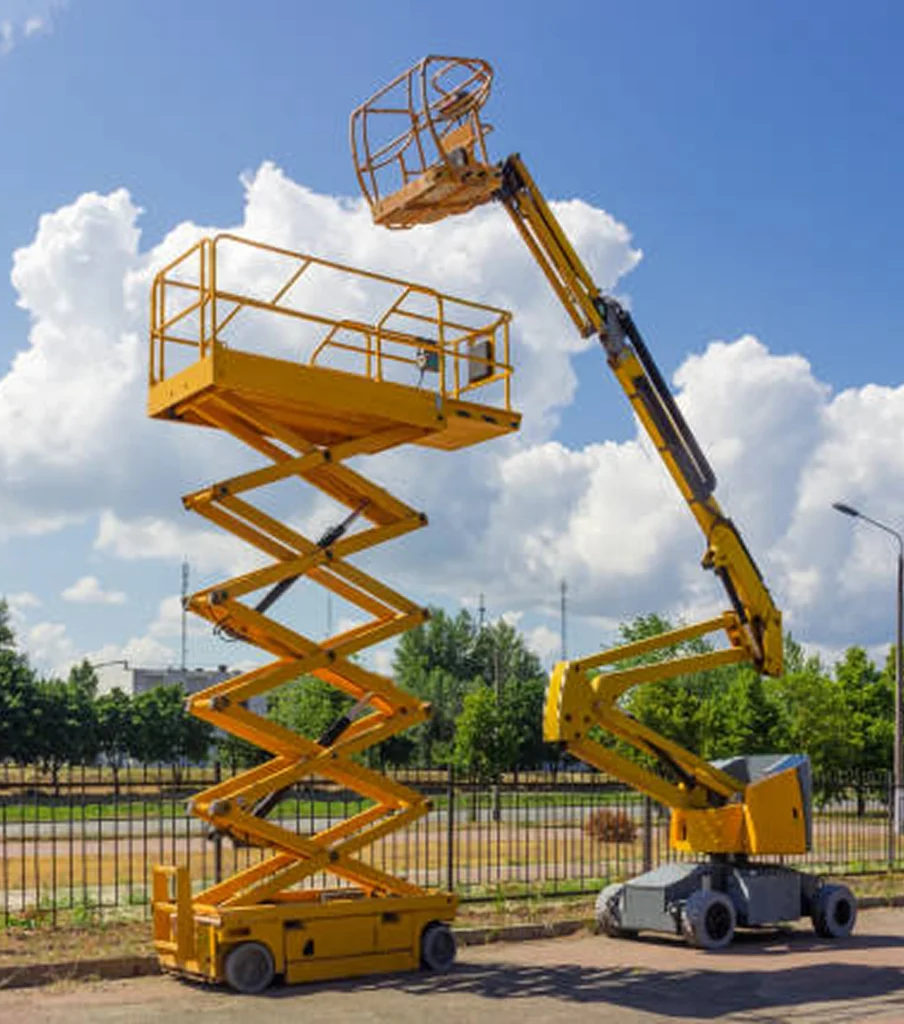
Consider Obstacles Between the Lift and the Work
A lift may technically reach the necessary height while still being poorly suited to the work area.
Shelving, machinery, counters, landscaping, construction materials, walls, or other obstacles can affect where the machine can be positioned.
Because scissor lifts primarily provide vertical elevation, positioning matters. If the machine cannot get sufficiently close to the work area, workers shouldn’t lean beyond the guardrails to compensate.
OSHA recommends positioning work platforms directly beneath or beside the work area and warns workers against leaning away from the lift.
Evaluate the entire work zone, not simply the vertical measurement.
Check Ceiling and Overhead Hazards
As the platform rises, the environment changes.
Beams, pipes, sprinkler systems, electrical equipment, lighting fixtures, door frames, tree branches, and other objects can create overhead hazards.
OSHA specifically identifies crushing and electrocution hazards as important concerns when positioning scissor lifts.
Before operation, workers should know what’s above and around the platform throughout its travel.
For detailed safety information, review the OSHA Scissor Lift Safety guidance, which covers stabilization, positioning, fall protection, maintenance, and worker training.
Machine Width Matters Too
Height can dominate the equipment-selection conversation, but width can determine whether the lift reaches the work area at all.
Indoor projects may require equipment to pass through doorways, corridors, warehouse aisles, elevators, gates, or other restricted areas.
Measure the narrowest access point on the route from delivery to the work location.
Compact electric scissor lifts may be appropriate for certain indoor applications where maneuverability and narrow access matter, but specifications vary by machine.
When discussing your rental, provide access measurements along with the required working height.
Indoor and Outdoor Jobs Have Different Requirements
An indoor warehouse floor and an outdoor construction site shouldn’t automatically use the same equipment.
Interior projects often involve smooth, finished surfaces and may favor electric equipment because of operating conditions and indoor air considerations.
Outdoor sites can introduce uneven terrain, slopes, wind, debris, and changing surface conditions.
Reliable Scissorlift Rental provides equipment for both indoor and outdoor applications. Explore our Services page learn more about the types of equipment available for different working environments.
Ground Conditions Affect Safe Elevation
The taller the elevated platform, the more important stability becomes.
OSHA recommends using scissor lifts on firm, level surfaces and avoiding hazards such as holes, slopes, bumps, drop-offs, debris, and other ground obstructions.
Outdoor conditions can change after rain, excavation, vehicle traffic, or construction activity.
Don’t assume that because the equipment was safely positioned in one location yesterday, every part of the site offers the same conditions today.
Operators should evaluate the work area before use and follow manufacturer requirements for the specific machine.
Wind Matters When Working Outdoors
Outdoor elevated work also requires attention to weather.
OSHA advises employers to use scissor lifts outside only when weather conditions are appropriate and to follow the manufacturer’s recommendations regarding wind.
This is particularly important in Florida, where weather conditions can change quickly.
If you’re arranging a scissor lift rental tampa florida project for exterior construction, maintenance, signage, painting, or another elevated task, consider weather conditions as part of the work schedule rather than focusing solely on equipment availability.
Account for Workers, Tools, and Materials
Platform capacity is another specification that shouldn’t be overlooked.
Workers may bring tools, lighting fixtures, paint, installation materials, equipment, or supplies onto the platform. All of that contributes to the total load.
OSHA advises users not to exceed the manufacturer’s platform load rating.
Before selecting a machine, estimate what needs to be on the platform during normal operation. A maintenance technician carrying lightweight hand tools may have different needs from a construction crew handling heavier materials.
Operator Training Remains Essential
Choosing the correct height doesn’t eliminate the need for proper operator training.
OSHA states that only trained workers should operate scissor lifts and that employers should ensure those workers demonstrate that they can use the equipment properly.
Training should address correct operation, material handling, weight limits, and relevant workplace hazards.
The equipment, operator, and worksite all need to be considered together.
Tampa Projects Should Consider the Complete Jobsite
If you’re researching scissor lift rental tampa florida options, provide more than the project address when requesting equipment.
Explain whether the work is indoors or outdoors, the required height, surface conditions, doorway or gate restrictions, number of workers, expected platform load, rental duration, and type of work being completed.
Florida’s outdoor conditions can also make weather planning particularly important.
Reliable Scissorlift Rental serves projects across multiple locations. Visit our Service Areas page to learn more about availability and discuss equipment for your Tampa-area or Florida project.
Don’t Choose Equipment Based on Height Alone
The tallest available machine isn’t automatically the best choice.
Larger equipment can create challenges involving access, maneuverability, transportation, weight, and working space. If the project only requires a moderate working height inside a commercial building, an appropriately sized compact machine may be more practical than unnecessarily large equipment.
The objective is to match the machine to the project.
To learn more about Reliable Scissorlift Rental, equipment quality, maintenance, flexible rental periods, and customer support, visit our About Us page before arranging your next rental.
Choose the Right Height Before the Lift Arrives
Selecting a scissor lift starts with understanding what workers actually need to reach. Measure the work area, distinguish platform height from working height, consider overhead obstacles, evaluate access points, check surface conditions, account for platform loads, and choose equipment designed for the environment.
Most importantly, don’t compensate for inadequate reach with unsafe improvisations.
Contact Reliable Scissorlift Rental today if you’re comparing scissor lift rentals or need a scissor lift rental tampa florida contractors and businesses can use for elevated work. Tell our team about your required height, work environment, access limitations, surface conditions, and rental timeline so we can help you explore appropriate equipment—reserve your scissor lift today.