
You know your project requires elevated access.
Maybe you’re installing electrical components near a ceiling, performing maintenance inside a warehouse, painting a commercial building, replacing overhead fixtures, or working on a construction project.
Now comes the practical question:
How much will the scissor lift cost to rent?
Search for scissor lift rental cost online and you’ll probably encounter a wide range of prices.
There’s a reason.
Scissor lifts aren’t all identical, and neither are rental projects.
A compact electric lift used for one day inside a warehouse can have very different requirements from outdoor equipment needed for several weeks on a construction site.
Understanding what influences pricing can help you request a more accurate quote and choose equipment based on what the project actually requires.
1. Rental Duration Is One of the Biggest Factors
Start with how long you’ll need the lift.
Equipment rentals are commonly structured around different periods, such as:
- Daily rentals
- Weekly rentals
- Monthly or longer-term rentals
The best option depends on your project schedule.
If you only need elevated access for a short maintenance task, a brief rental period may make sense.
If you’re completing a commercial renovation that involves several phases of overhead work, a longer rental may be more practical.
When comparing scissor lift rental costs, don’t simply compare the advertised daily rate.
Calculate the likely cost based on the actual amount of time you’ll need the equipment.
If you’re planning an upcoming project, visit our Services page to explore available scissor lift rental options and find equipment suited to your working height, environment, and project duration.
2. Working Height Can Affect the Equipment You Need
How high do you actually need to reach?
That’s one of the first questions you should answer.
Different scissor lifts offer different platform and working heights. Choosing the right height isn’t about renting the tallest machine available.
It’s about having sufficient access for the job.
Measure or determine:
- Work height
- Ceiling height
- Obstructions
- Overhead clearance
- Platform requirements
Don’t guess.
Renting equipment that doesn’t reach high enough can stop the project.
Renting substantially more equipment than the job requires may also be unnecessary.
The appropriate scissor lift rental cost should be evaluated against the equipment specifications your project actually needs.
3. Indoor and Outdoor Equipment May Have Different Requirements
Where will the scissor lift operate?
Indoor work often involves relatively smooth, level flooring and tighter spaces.
Outdoor work can involve completely different conditions.
Think about:
- Concrete
- Asphalt
- Gravel
- Uneven surfaces
- Slopes
- Weather exposure
- Ground conditions
OSHA advises employers to select work locations with firm, level surfaces away from drop-offs, holes, slopes, bumps, ground obstructions, and debris. It also states that scissor lifts should only be used outdoors when weather conditions are appropriate.
The environment can therefore influence which type of equipment is appropriate—and ultimately affect scissor lift rental costs.
4. Electric Versus Rough-Terrain Equipment Matters
A compact electric scissor lift and a larger rough-terrain machine aren’t designed for identical applications.
Electric units may be suitable for many indoor jobs where low noise, maneuverability, and smooth flooring are important.
Outdoor construction work may require equipment designed around more demanding site conditions.
Before requesting a quote, tell the rental provider:
- Whether you’re working indoors or outdoors
- What surface the lift will operate on
- Whether access is restricted
- How high you need to work
- How much platform capacity you require
Accurate information makes it easier to identify appropriate equipment instead of simply choosing based on price.
5. Platform Capacity Can Influence Your Choice
Consider what will actually be on the platform.
One worker?
Two workers?
Tools?
Materials?
Equipment?
Every scissor lift has limitations.
OSHA emphasizes that employers should never allow the weight on a scissor lift’s platform to exceed the manufacturer’s load rating.
Don’t choose a smaller machine just because its rental rate appears lower if the platform capacity doesn’t meet your actual needs.
The equipment needs to support the work safely and appropriately.
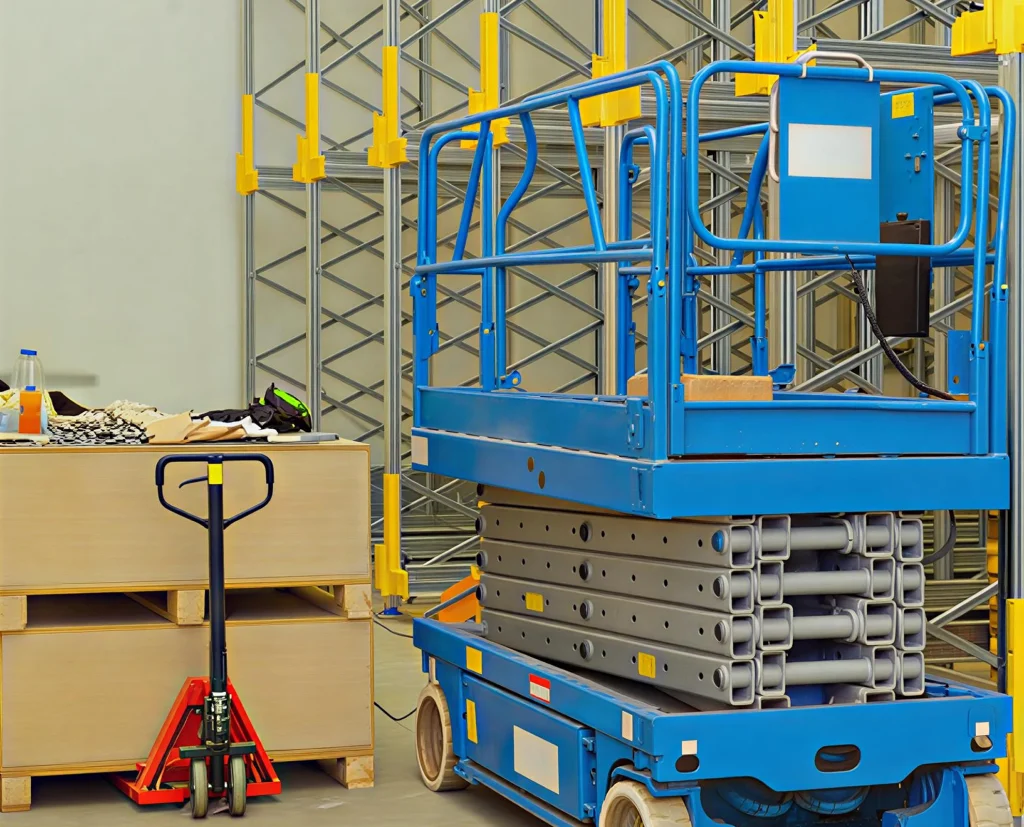
6. Delivery and Pickup Can Affect the Final Cost
The advertised rental rate may not represent every project expense.
Depending on the rental arrangement, transportation can influence the final quote.
Consider:
- Delivery distance
- Job-site location
- Equipment size
- Pickup requirements
- Scheduling
When comparing scissor lift rental costs, ask what the quote includes.
A lower base rental rate doesn’t necessarily mean a lower total project cost if additional transportation or other charges apply.
Requesting a complete quote makes comparisons more useful.
7. Your Location Can Influence Pricing
Equipment availability varies from one market to another.
So can transportation requirements.
A lift available close to your project may involve different logistics from equipment that needs to travel a greater distance.
This is another reason online price estimates should be treated as general reference points rather than guaranteed rates.
Reliable Scissorlift Rental can help customers identify available equipment based on project location and requirements.
If you’re unsure whether rental service is available for your project, visit our Service Areas page to explore the locations we serve and learn more about arranging scissor lift delivery.
8. Equipment Availability Can Matter
Construction equipment demand isn’t identical throughout the year.
Local projects, seasonal construction activity, and equipment availability can all affect rental options.
If you know you’ll need a particular type of lift on a specific date, planning early can give you more time to coordinate the equipment.
Waiting until the morning the job begins can limit your choices.
Whenever possible, determine your equipment needs while you’re planning the project—not after the crew is already waiting.
9. Job-Site Access Can Affect Which Lift You Can Use
Suppose you’ve found equipment with the correct working height and capacity.
Great.
Will it fit through the building?
Measure:
- Doorway width
- Doorway height
- Hallways
- Elevators, where applicable
- Gates
- Work areas
- Turning space
A lift that’s appropriate once inside the building doesn’t help if it can’t reach the work area.
This is particularly important for indoor maintenance and construction projects.
Providing accurate access measurements can help prevent delivery-day surprises.
10. Don’t Forget About Overhead Hazards
Before choosing equipment, inspect the area above the work zone.
Look for:
- Power lines
- Electrical equipment
- Pipes
- Beams
- Sprinkler systems
- Lighting
- Overhangs
OSHA emphasizes positioning scissor lifts to avoid crushing and electrocution hazards. Its guidance recommends selecting work locations that don’t approach electrical power sources by at least 10 feet and don’t present other overhead hazards.
Equipment selection and work-site planning need to happen together.
11. Training Is Part of Planning the Rental
Finding the right equipment doesn’t mean the project is ready to begin.
You also need properly trained workers.
OSHA states that only trained workers should be allowed to use scissor lifts and that employers should ensure workers can demonstrate proper operation. Training should address correct operating procedures, material handling and weight limits, and workplace hazards.
This is important when estimating the complete project—not just the rental rate.
For official guidance, visit OSHA’s Scissor Lift Safety resource.
12. Longer Rental Periods Need Better Scheduling
Suppose you reserve a lift for one week.
But the task requiring elevated access doesn’t begin until day three.
Now you’re paying for equipment that’s sitting unused.
Project scheduling can influence your effective scissor lift rental cost just as much as the rental rate itself.
Coordinate the rental with:
- Material deliveries
- Crew schedules
- Inspections
- Subcontractors
- Weather-sensitive work
- Other equipment
The objective is to have the lift available when your crew actually needs it.
13. The Cheapest Lift Isn’t Always the Cheapest Solution
This is one of the most important points when comparing rental options.
Suppose Lift A costs less.
But it’s smaller and requires workers to reposition it repeatedly.
Lift B costs slightly more but better matches the height, platform, and project requirements.
The cheaper rental isn’t necessarily creating the lower project cost.
Equipment can influence labor efficiency and scheduling.
Choose based on the complete project rather than the rental rate in isolation.
To learn more about our approach to helping customers find suitable elevated-access equipment, visit our About Us page and discover how Reliable Scissorlift Rental works with contractors, businesses, facilities, and other customers to match equipment with project requirements.
14. Understand What Is Included in Your Quote
Before agreeing to a rental, ask questions.
Your quote should make it clear what you’re paying for.
Depending on the rental provider and project, ask about:
- Rental period
- Delivery
- Pickup
- Equipment specifications
- Additional fees
- Extension rates
- Fuel or charging expectations
- Damage policies
Don’t assume.
A clear quote makes it easier to compare options and plan the project budget.
15. Build a Little Flexibility Into the Rental Schedule
Projects don’t always go exactly according to plan.
Materials arrive late.
Another trade needs additional time.
Weather interrupts outdoor work.
An inspection changes the schedule.
If your project timeline is extremely tight, a small delay can create problems.
Think realistically about how long you’ll need the equipment.
Sometimes scheduling slightly more rental time is more practical than repeatedly extending the rental at the last minute.
16. Don’t Let Price Override Safety
Cost matters.
But the lowest scissor lift rental cost isn’t valuable if the equipment doesn’t fit the job.
OSHA identifies three major areas employers need to address when using scissor lifts: fall protection, stabilization, and positioning.
Its guidance also emphasizes equipment maintenance, manufacturer instructions, worker training, appropriate PPE, and safe work practices.
The appropriate rental should allow trained workers to perform the intended task using equipment designed for the conditions involved.
17. Provide Details When Requesting a Quote
Want a more useful rental quote?
Don’t simply ask:
“How much is a scissor lift?”
Instead, provide:
- Project location
- Rental dates
- Indoor or outdoor use
- Required working height
- Surface conditions
- Doorway or access restrictions
- Platform requirements
- Expected rental duration
That gives the rental provider enough information to identify appropriate options.
It also makes your scissor lift rental costs easier to estimate accurately.
18. Compare Total Value, Not Just the Daily Rate
When reviewing options, consider the complete rental.
Ask yourself:
Does the equipment fit the job?
Does it reach the required height?
Can it access the work area?
Is it suitable for the surface?
Does the platform support the intended load?
Is delivery available when needed?
Does the rental duration match the project?
A low daily rate doesn’t solve any of those problems by itself.
The best value is equipment that helps your crew perform the required work efficiently while staying within the machine’s operating limitations.
Get a Scissor Lift Rental Quote for Your Project
There isn’t one universal scissor lift rental cost because every project has different requirements. Equipment type, working height, platform capacity, rental duration, job-site location, delivery, operating environment, and availability can all influence pricing.
Understanding those factors makes it easier to compare scissor lift rental costs and avoid choosing equipment based on price alone.
Reliable Scissorlift Rental helps contractors, maintenance teams, businesses, and other customers find equipment suited to their specific elevated-access needs. Whether you’re planning a short indoor project or need equipment for a longer construction job, starting with accurate project information can help you find the right rental solution.
Contact Reliable Scissorlift Rental today to discuss your project requirements, check equipment availability, and request a scissor lift rental quote based on the equipment and rental period you actually need.